When a Real Rolex Becomes “Fake”
In a single afternoon in Bencoolen, a 24-year-old Italian managed to walk straight into what lawyers call an “impossible attempt” – the legal equivalent of trying to steal from an empty pocket and still getting arrested for it.
The short version sounds almost like fiction. He tried to cheat a Singapore watch dealer by passing off what he believed was a fake Rolex GMT Saru. The problem was simple: the watch wasn’t fake. It was authentic. And that misunderstanding has now cost him seven months in a Singapore prison.
The case, reported by Channel News Asia after sentencing, plays out less like a sophisticated heist and more like a chain reaction of bad judgment inside the high-stakes, high-paranoia world of luxury watch trading.
A “dud” watch that wasn’t
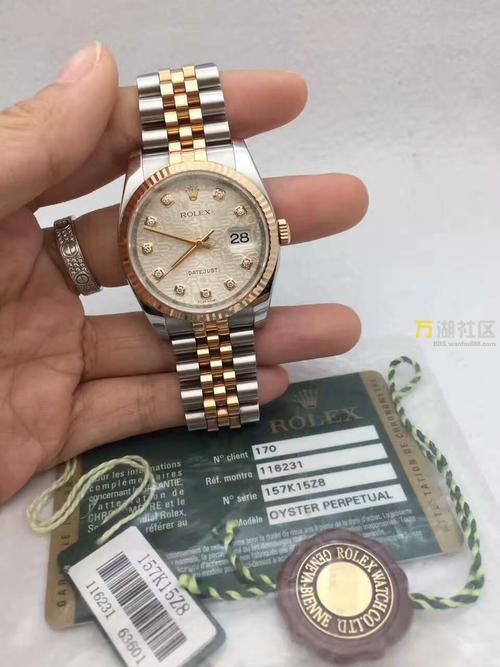
Earlier in 2025, Singh acquired a Rolex GMT Saru from an acquaintance known only as “Matteo”. He paid €55,000 in cash and added a €5,000 Cartier bracelet, believing the watch had a resale value closer to €90,000.
For most people, that alone would be a major transaction. In the off-catalogue Rolex world, though, it’s the kind of reference that sits in a different category entirely. The GMT Saru is gem-set, extremely rare, and reportedly limited to around 20 genuine pieces. If authentic, it’s a collector’s highlight. If not, it’s an expensive mistake waiting to be discovered.
Friends urged him to verify it properly. A watch shop eventually examined the piece and raised a troubling possibility: the case might have been replaced, with a genuine serial number re-lasered onto it. In that moment, Singh concluded the watch was compromised. From there, the decision-making started to unravel.
The Singapore plan
On 27 November 2025, Singh flew to Singapore with friends, intending to offload the watch and use the proceeds to buy other Rolex pieces he could resell back in Europe.
The following afternoon he visited The Watch Room in a Bencoolen shopping mall. He arrived with the watch and its warranty card, sat down with the 32-year-old director, and began negotiating a deal.
The dealer’s initial assessment was the opposite of Singh’s expectations. Far from being “fake,” the Saru appeared to be a legitimate off-catalogue Rolex worth around S$120,000. After negotiation, they settled at S$94,700.
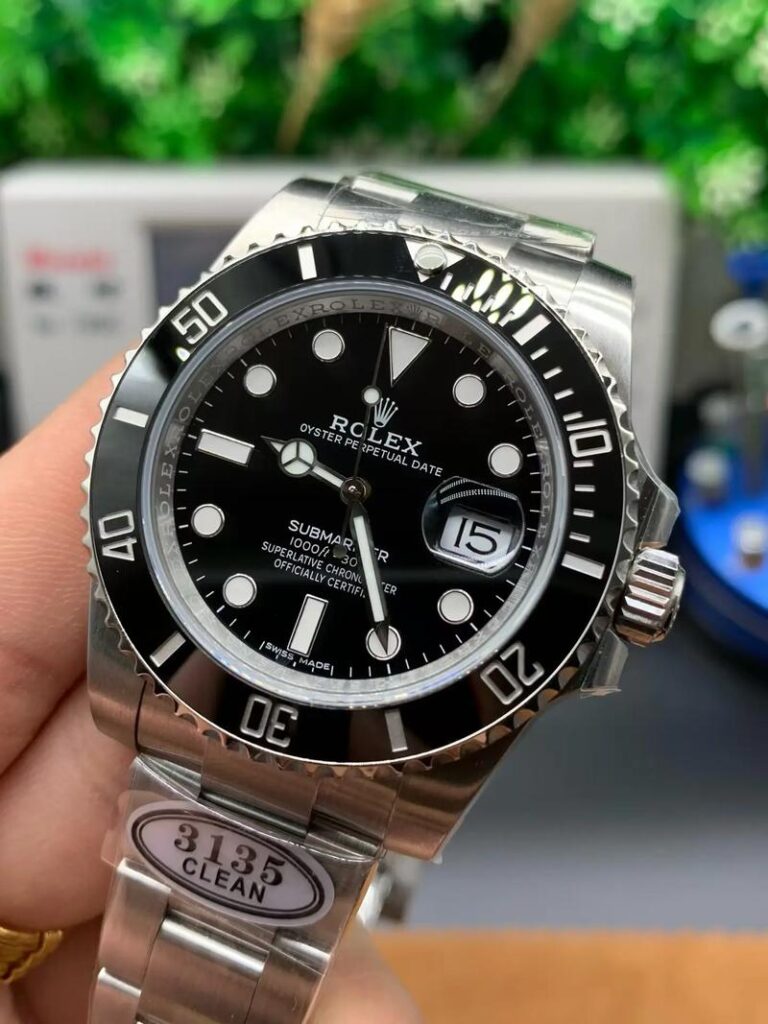
Singh didn’t ask for a bank transfer. He wanted watches instead: a replica Rolex Daytona (S$25,200), a GMT-Master II (S$25,400), and a Submariner (S$44,000). A small S$300 adjustment was added because no boxes were included.
Before finalising anything, the dealer did what experienced retailers always do. He inspected the warranty card under UV light, checked the printing, examined the watch closely, and consulted a contact. Everything appeared legitimate.
Singh also provided a digitally altered passport copy under the name “Sinsi Deepak,” a clumsy forgery that only mattered later, once everything else collapsed.
He walked out with three Rolex watches, believing he had successfully traded away a counterfeit.
The moment it started to fall apart
The dealer’s doubts only surfaced after Singh left. He brought the Saru to neighbouring shops for a second opinion. One detail stood out: the serial engraving. Under magnification, it appeared inconsistent – possibly re-lasered, the kind of detail that often signals a “franken” Rolex built from mixed components.
The dealer called Singh immediately.
Singh, now panicked and still convinced he had unknowingly sold a fake, agreed to return. Then he disappeared instead. He booked a late-night flight to Rome via Helsinki and headed to Changi Airport.
Police intercepted him before boarding. He was arrested at the airport.
The twist no one expected
After the arrest, Singapore police sent the watch to the Rolex Service Centre for verification.
The result flipped the entire case on its head: every component was authenticated as original. The watch Singh had tried to offload as fake was, in fact, fully genuine.
In practical terms, he had flown across continents, falsified identity documents, and attempted to defraud a dealer – all while holding a legitimate, highly valuable Rolex that would likely have sold easily in Europe.
The legal irony is hard to miss. Singapore law still treats this as an “impossible attempt” under Section 511(3) of the Penal Code: intent and actions matter, even if the underlying crime couldn’t succeed. In other words, you can still be guilty of trying to commit something that was never actually possible.
Sentencing and arguments
Deputy Public Prosecutor Sean Teh pushed for a 12-month sentence, pointing to the fact that the deal had effectively been executed and Singh had attempted to flee.
The defence, from LVM Law Chambers, argued for six months, highlighting that no actual financial loss occurred, that Singh had no prior convictions, and that his family circumstances made travel support difficult.
His parents – a housekeeper and a cook earning under S$2,300 combined per month -would not realistically be able to visit him from Italy.
The court settled on seven months’ imprisonment. Singh pleaded guilty to attempted cheating, with a separate charge relating to the forged passport taken into consideration.
The uncomfortable takeaway
There’s no real sympathy angle here for the attempted fraud. The dealer did exactly what professionals are supposed to do: inspect, verify, re-check, and seek a second opinion. That process is precisely what exposed the problem.
But what makes the case unusual isn’t sophistication – it’s the opposite. It collapses because of misinterpretation. A genuine watch was treated as fake, then weaponised as part of a scam, and finally revealed to be authentic only after everything had already gone wrong.
The simplest lesson is also the oldest in the luxury watch world: buy the seller, not just the watch. And when in doubt, authentication should come from someone who genuinely understands the reference – not a quick opinion or a half-check under pressure.
If Singh had been right about the watch being fake, his actions might have made sense in his own internal logic. The problem is that he was wrong about the one thing that mattered most.
The bigger backdrop: a market where numbers stop making sense
This kind of confusion doesn’t exist in isolation. It sits inside a wider market that has been stretching logic for years.
Take the Rolex GMT-Master II 126710BLRO, the steel “Pepsi” model. When it launched in 2018, retail pricing was around $9,500 USD. Even on the secondary market, it traditionally traded in the $22,000–$29,000 range – already more than double retail, but still within a familiar pattern for high-demand Rolex sports models.
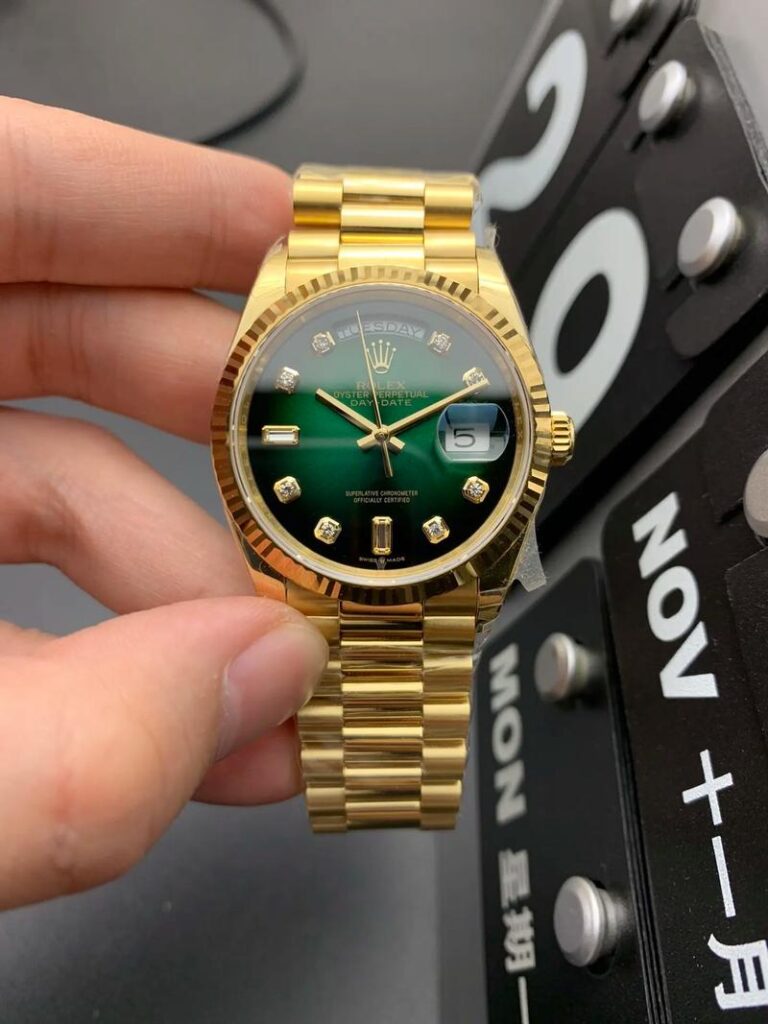
Following discontinuation rumours and supply tightening, demand accelerated sharply. Some platforms reported purchase interest spikes of several hundred percent in short periods, and median resale prices climbed further, particularly in Australia where averages moved from roughly $31,000 to over $35,000 within months.
That part is still understandable. Supply shock plus strong brand demand usually pushes prices up.
What comes next is where things start to detach.
Some listings began appearing at $100,000+ levels – more than eight to ten times retail – often accompanied by “Popular” tags and polished listing photos. The logic, if there is one, is momentum: list high, wait for fear-driven buyers, then reset the cycle slightly below the last extreme price.
It becomes less about valuation and more about psychology.
In reality, specialist dealers still place clean examples of the 126710BLRO closer to the $22,000–$30,000 range. That’s the actual liquidity band – what watches reliably sell for when both buyer and seller are grounded in the same market reality.
Everything above that is speculation dressed up as scarcity.
And scarcity narratives in luxury markets have a habit of feeding on themselves, at least until they don’t.
The irony ties everything together. One man lost seven months in prison because he believed a real watch was fake. Around the same time, the broader market was busy pretending increasingly ordinary replica watches had become ultra-rare assets worth six figures.
In both cases, the same problem shows up in different forms: misjudging what something is actually worth, and acting decisively on that misunderstanding.
