A Deep Dive Into the Strange World of Regatta Timers
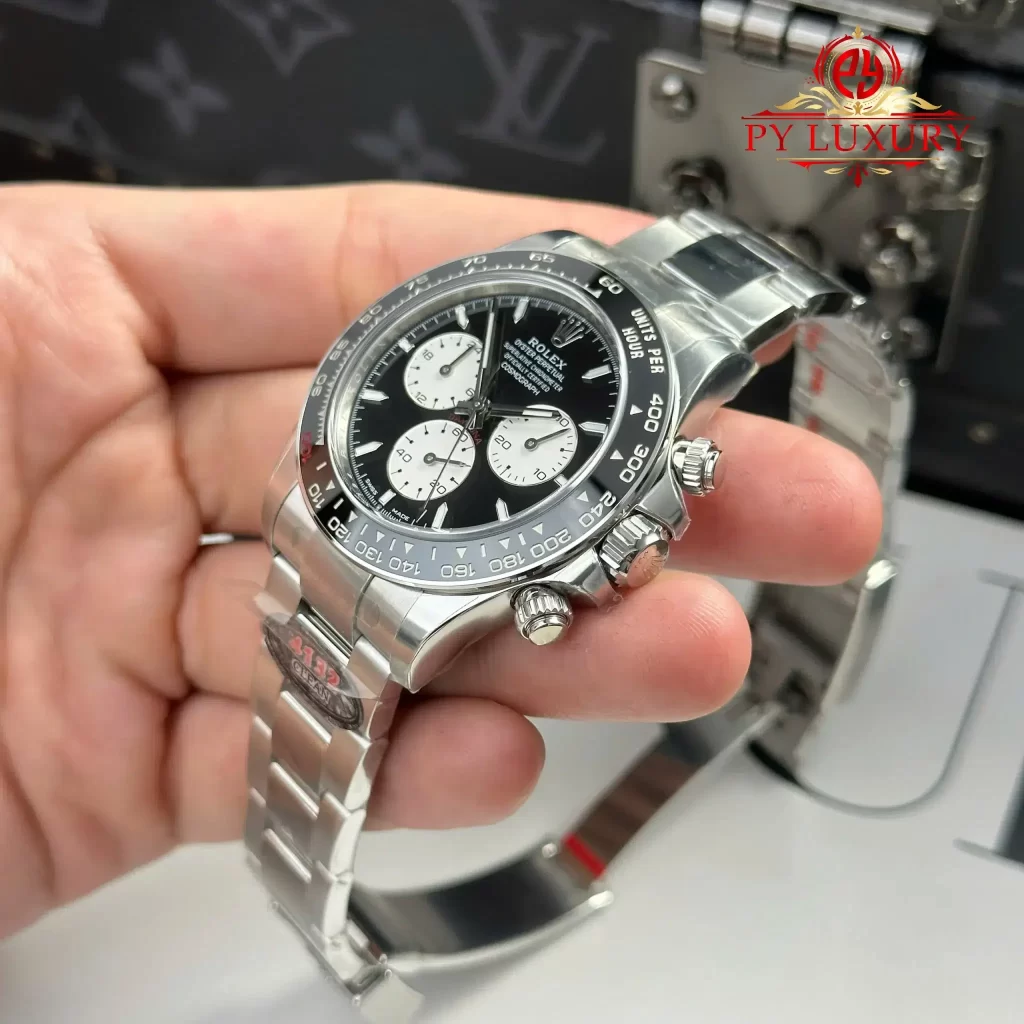
The new Grand Seiko Ushio 300 was always going to get attention. A titanium Evolution 9 diver with a U.F.A. Spring Drive movement? That’s catnip for enthusiasts. So for this week’s showdown, it felt only right to pair it against something almost absurdly difficult to buy in the real world — the titanium Rolex Yacht-Master 42.
Technically speaking, these watches don’t even belong in the same category. The Grand Seiko is a proper dive watch. The Yacht-Master has always been Rolex’s softer, more luxurious take on the nautical sports watch. Still, put them side by side and the overlap becomes obvious pretty quickly. Titanium case. Titanium bracelet. Rotating bezel. Aquatic lifestyle positioning. Similar pricing, at least on paper.
And honestly? If you’re spending north of €12,000 on a titanium sports watch, chances are you’ve at least thought about both.
At retail, the Grand Seiko Ushio 300 lands around €12,500. The Yacht-Master 42 sits at roughly €15,750, assuming your local authorized dealer even wants to have that conversation. Which, of course, is part of the problem.
Before getting into today’s argument, though, we should probably address last week’s result.
Last Week’s Showdown Wasn’t Even Close
Last Sunday, the Parmigiani Fleurier Tonda PF Chronographe Mystérieux went up against the H. Moser & Cie. Endeavour Perpetual Calendar Concept Tantalum. Two wildly different watches connected mostly by the idea of restraint and mystery.
The comments section, however, leaned heavily one way.
The Parmigiani walked away with 79% of the vote.
Not terribly surprising, honestly. Moser’s perpetual calendar remains one of the most divisive modern interpretations of the complication. Some collectors absolutely love the stripped-back approach. Others think it looks unfinished. Or confusing. Sometimes both.
Parmigiani, meanwhile, tends to win people over quietly. The design language is calmer, more elegant, and probably easier to live with long term.
Thomas: Why the Grand Seiko Ushio 300 Makes More Sense
Good morning, Fratelli. And Daan, I already know we’re going to disagree on this one.
The funny thing is that these two replica watches feel completely different despite sharing so much on paper. Most people will probably know which side they’re on immediately. Rolex people tend to stay Rolex people. Grand Seiko enthusiasts…well, they usually become even more obsessed over time.
The Ushio 300 Actually Justifies Its Price
This is where I struggle with the Yacht-Master.
Whenever I look at luxury divers, I instinctively compare them to the Submariner. Maybe that’s unfair. But the Sub has become the benchmark whether brands like it or not.
So if another watch costs significantly more, I need a reason.
For starters, there’s the U.F.A. Spring Drive movement. The brand’s official technical material explains that the new Ultra Fine Accuracy caliber targets a staggering ±20 seconds per year, which still sounds faintly ridiculous in a mechanical-luxury-watch context.
Then there’s the finishing. Zaratsu polishing isn’t marketing fluff; under natural light, the sharp transitions and distortion-free surfaces really do stand out. Even people who don’t normally care about finishing notice it.
Grand Seiko simply can’t help itself here. Even when making a supposedly serious tool watch, the company still adds layered textures and shifting light effects that look like they belong on something far dressier. It’s excessive. Slightly nerdy too. But kind of wonderful.
So yes, €12,500 is still an enormous amount of money. But at least the watch feels like something ambitious happened.
The Yacht-Master Feels More Like Positioning
Now let’s look at the Rolex.
What exactly explains the massive premium over a Submariner?
The titanium construction helps, sure. The watch is noticeably lighter on the wrist. But you’re also getting less water resistance and a more decorative bezel that becomes difficult to read in certain lighting conditions.
A lot of the price, frankly, comes down to exclusivity and positioning.
And that’s before we get into actual market pricing.
Anyone seriously shopping for a titanium Yacht-Master today probably already knows the reality: retail pricing is almost theoretical. On the secondary market, these watches regularly trade far above MSRP. Hype has become part of the ownership experience whether people admit it or not.
That changes the emotional character of the watch.
One Watch Feels Inward-Facing, the Other Outward-Facing
This is where things become less objective.
The Yacht-Master increasingly feels like a watch designed to communicate something outwardly. Success, access, scarcity. There’s nothing inherently wrong with that, by the way. Luxury watches have always carried social meaning.
Still, you can sense it in the product itself.
The Yacht-Master was never really a hardcore tool watch. It has always been the luxurious Submariner — slightly softer, slightly flashier, slightly more lifestyle-oriented. The titanium version tries to reclaim some tool-watch credibility visually, but the polished design language is still there underneath.
The Ushio 300 approaches things from a completely different angle.
It feels like a watch built by engineers and obsessive enthusiasts who kept asking, “Could we improve this another 1%?” even when nobody requested it.
That’s basically Grand Seiko in a nutshell.
Spring Drive exists because the brand refused to accept the limitations of traditional escapements. Zaratsu polishing exists because ordinary polishing apparently wasn’t enough. Sometimes the results feel overthought. But at least they feel sincere.
And honestly, sincerity matters more to me now than status signaling.
Daan, go ahead. Tell me why I’m completely wrong.
The Titanium Yacht-Master Is Quietly One of Rolex’s Best Modern Watches
Thanks, Thomas.
And actually, before I start defending the Yacht-Master, I should say this: the Ushio 300 is probably the most convincing modern Grand Seiko diver I’ve worn in years.
The new proportions help enormously. At 40.5mm, it finally feels balanced rather than oversized. The bracelet taper is long overdue, and thankfully Grand Seiko listened to the criticism there. Even the rectangular markers gave me vintage Seiko 6105 vibes almost immediately, which I suspect wasn’t accidental.
Grand Seiko still can’t resist overcomplicating the visual experience.
The Ushio 300 Tries a Bit Too Hard
Thomas mentioned the dial texture as a positive. I’m less convinced.
Do we really need wave textures, a fumé effect, glossy ceramic, highly reflective surfaces, and a power reserve indicator all on the same dive watch?
At some point, restraint matters too.
And yes, I know Grand Seiko says the power reserve display helps divers check remaining energy before a dive. Fair enough. But if we’re being honest, it mostly feels like the brand simply couldn’t bear leaving empty space on the dial.
The Yacht-Master, by comparison, feels incredibly calm.
No unnecessary colors. No visual noise. Just matte titanium, monochrome contrast, and that slightly stealthy Cerachrom bezel that changes character depending on the lighting.
Oddly enough, it’s one of the few modern Rolex sports watches that actually feels understated.
Rolex Still Makes the Better Bracelet
I’ll give Grand Seiko credit for improving its bracelet game lately. It was overdue.
But Rolex still leads here.
The Oyster bracelet on the Yacht-Master feels almost deceptively simple until you wear it for a while. Then you notice how fluid it feels, how little rattle there is, how perfectly the clasp integrates into daily wear.
Rolex also notes that the bracelet includes ceramic inserts within the links to reduce long-term wear and stretch. It’s one of those invisible engineering decisions the company rarely talks about loudly. Rolex Oyster bracelet technology
And honestly, that’s very Rolex.
The engineering is often hidden rather than displayed.
Conservative? Yes. But Maybe That’s Why It Works
Thomas is right about one thing: the Yacht-Master is conservative.
Very conservative.
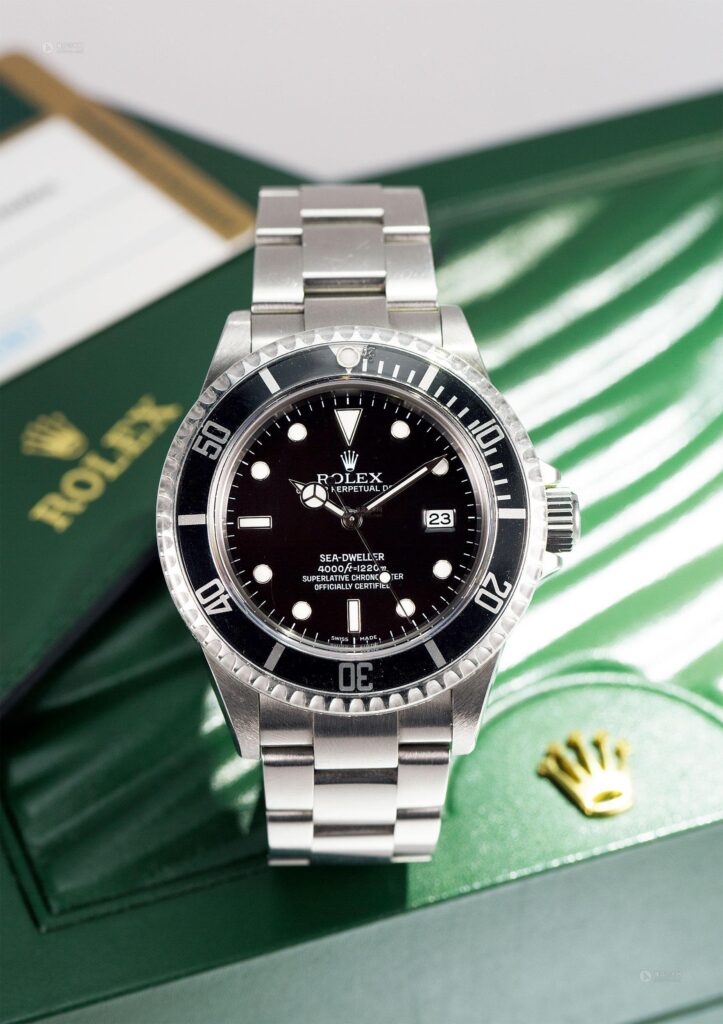
In some ways, it’s barely removed from the Submariner formula at all. But I think that familiarity is exactly why the watch works so well on the wrist. You put it on and immediately understand it.
With Grand Seiko, I usually need adjustment time. There are quirks to process. The hands catch light differently. The polishing behaves differently. The dials can feel visually intense.
Sometimes that complexity becomes rewarding. Other times it just feels busy.
The Yacht-Master doesn’t ask for patience. It simply works.
And maybe that sounds boring. But after years of increasingly loud luxury sports watches, boring can actually feel refreshing.
The Curious Decline of the Regatta Timer
This week’s debate naturally led us toward another strange corner of watchmaking: regatta timers.
These things used to be everywhere in the 1960s and ’70s. Sailing culture had real influence back then, especially in Europe. Brands experimented with colorful countdown displays, oversized chronograph registers, and quirky nautical complications that now feel wonderfully specific to another era.
Today? Regatta timers are rare.
Partly because sailing itself occupies a niche cultural space now. And partly because modern smartwatches frankly do many of these functions better.
Still, mechanical regatta timers remain fascinating precisely because they’re so specialized.
Here are five of the most interesting alternatives to the Rolex Yacht-Master II currently out there.
Five Interesting Rolex Yacht-Master II Alternatives
| Watch | Case Size | Movement | Price |
|---|---|---|---|
| Omega Seamaster Regatta | 46.75mm titanium | Caliber 5701 quartz | €8,200 |
| TAG Heuer Carrera Skipper | 39mm steel/gold | TH20-06 automatic | €7,500 |
| Albishorn Marinagraph | 41mm steel | ALB01 A automatic | CHF 3,950 |
| Tissot Sideral | 41mm forged carbon | Powermatic 80 | €1,095 |
| Yema Yachtingraf Meca-Quartz | 38.5mm steel | Seiko VK63 | €369 |
Omega Seamaster Regatta
The modern Omega Seamaster Regatta feels closer to an aviation instrument than a traditional sailing watch. Which makes sense once you realize it shares conceptual DNA with the X-33.
Released around the 37th America’s Cup, the watch combines analog hands with a digital display and packs in an absurd number of functions:
- programmable regatta timer,
- chronograph,
- moonphase,
- sailing logbook,
- alarms,
- temperature gauge,
- accelerometer.
Honestly, it borders on overkill. But in a strangely entertaining way.
At nearly 47mm wide, it sounds enormous. Yet the titanium construction helps a lot on the wrist. It’s still big, obviously, but not unmanageable.
And the quartz caliber’s ±7 seconds per year accuracy is genuinely impressive for a dedicated sports instrument.
TAG Heuer Carrera Chronograph Skipper
The modern TAG Heuer Skipper may be the easiest regatta watch to love emotionally.
Partly because it doesn’t scream “specialized sailing equipment” immediately.
Instead, it feels playful.
The seafoam-green subdial, bright orange accents, and tricolor countdown segments bring back the wonderfully eccentric energy of late-1960s racing chronographs. Somehow the watch manages to feel vintage-inspired without becoming nostalgic cosplay.
That’s harder to pull off than people think.
The TH20-06 movement underneath is solid too, offering an 80-hour power reserve and modern chronograph reliability. But honestly, the Skipper wins mostly on charm.
Some watches are technically interesting. This one is just fun.
Albishorn Marinagraph
This might be the most interesting watch on the list.
Albishorn approaches design through what it calls “imaginary vintage” — essentially creating watches that feel historically plausible even though they never actually existed.
And weirdly enough, it works.
The Marinagraph looks like something pulled from an obscure sailing catalog from 1958. The left-side pusher arrangement feels unusual immediately, and the tide-monitoring bezel adds a level of functional weirdness that makes the watch memorable.
Also, limiting production to 99 examples per version gives it a small-scale enthusiast appeal that larger brands simply can’t replicate.
It’s not the most versatile option here. But it might be the coolest conversation starter.
Tissot Sideral
The modern Tissot Sideral is the oddball of this group.
Technically, it’s more dive watch than regatta timer. The colorful countdown scale sits inside an otherwise very capable 300m sports watch.
Still, the whole thing captures that funky 1970s experimental spirit surprisingly well.
Forged carbon keeps the weight down dramatically — only 90 grams total — and the perforated rubber strap looks exactly the right amount of ridiculous for summer wear.
And honestly, that matters.
Not every sports watch needs to feel serious all the time.
At just over €1,000, it’s also the easiest entry point into this strange little category.
Yema Yachtingraf Croisière Meca-Quartz
Finally, there’s the Yema Yachtingraf Croisière.
This is probably the best value proposition on the entire list.
The use of the Seiko VK63 meca-quartz movement keeps costs low while still preserving the satisfying mechanical feel of a traditional chronograph. You still get that sweeping chronograph seconds hand and those tactile pusher clicks people love.
The oversized regatta subdial at 9 o’clock also gives the watch genuine visual identity rather than making the sailing functionality feel like an afterthought.
And the vintage-style Hesalite crystal adds exactly the kind of warmth you’d hope for in a retro-inspired nautical chronograph.
For €369, it’s hard not to admire the thing a little.
The funny thing about regatta timers is that almost nobody truly needs one anymore.
Even serious sailors often rely on digital instruments now.
But maybe that’s beside the point.
These watches survive because they represent a very specific kind of optimism from mechanical watchmaking — a period when brands were willing to create strange, highly specialized tools for niche passions. Some were wildly impractical. Some looked borderline ridiculous.
As for the original showdown between the Grand Seiko Ushio 300 and the Rolex Yacht-Master 42, the answer probably depends on what you want from a luxury sports watch in the first place.
