The Best Rolex Fakes Can Look Convincing and Still Fail the Buyer
The magazine’s reporters ordered a 36mm Oyster Perpetual Celebration, a model whose playful, multicolored dial makes it instantly recognizable. What arrived was a 41mm version. The watch looked convincing, kept time, and attracted no apparent suspicion when a Rolex employee in London adjusted its bracelet. Yet it was not the watch the customer had ordered.
When the journalists raised the problem, the seller offered a discount on a future purchase rather than an exchange or refund.
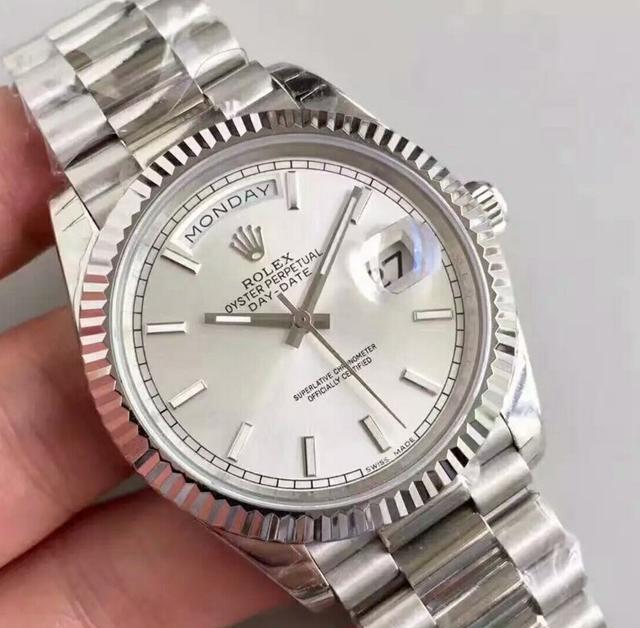
That discrepancy exposes a weakness in the way people talk about the best Rolex fakes. Much of the discussion concentrates on how closely a replica resembles a genuine watch, with enthusiasts debating dial printing, case geometry, movement architecture, and the quality of ceramic bezels. Those comparisons can be technically sophisticated, but they measure only part of what makes a watch worth owning.
The WIRED investigation involved three counterfeit Rolex watches purchased for a combined $1,704. All three arrived within approximately a month and appeared convincing to the reporters. A specialist subsequently examined them and identified differences that were not immediately apparent from their external appearance.
The experiment did not establish how frequently counterfeit watches pass professional inspections, nor did the boutique encounter constitute a formal Rolex authentication. The employees were performing a bracelet adjustment, not conducting a comprehensive examination of the movement and components.
Nevertheless, the reporting captured an important contradiction. A watch can perform remarkably well in a casual visual encounter while failing a much more basic requirement: being the product the customer actually paid for.
That is a better starting point for evaluating replica quality than a factory ranking alone.
What the Boutique Encounter Proved, and What It Didn’t
The Rolex store visit is an effective story because it challenges the assumption that an experienced employee will immediately recognize every counterfeit.
The replica was sufficiently convincing for staff to handle it, adjust its bracelet, and return it without identifying it as fake during the encounter. That suggests the watch reproduced enough of the familiar Oyster Perpetual‘s appearance and construction to pass an informal interaction.
But the limits of the episode matter.
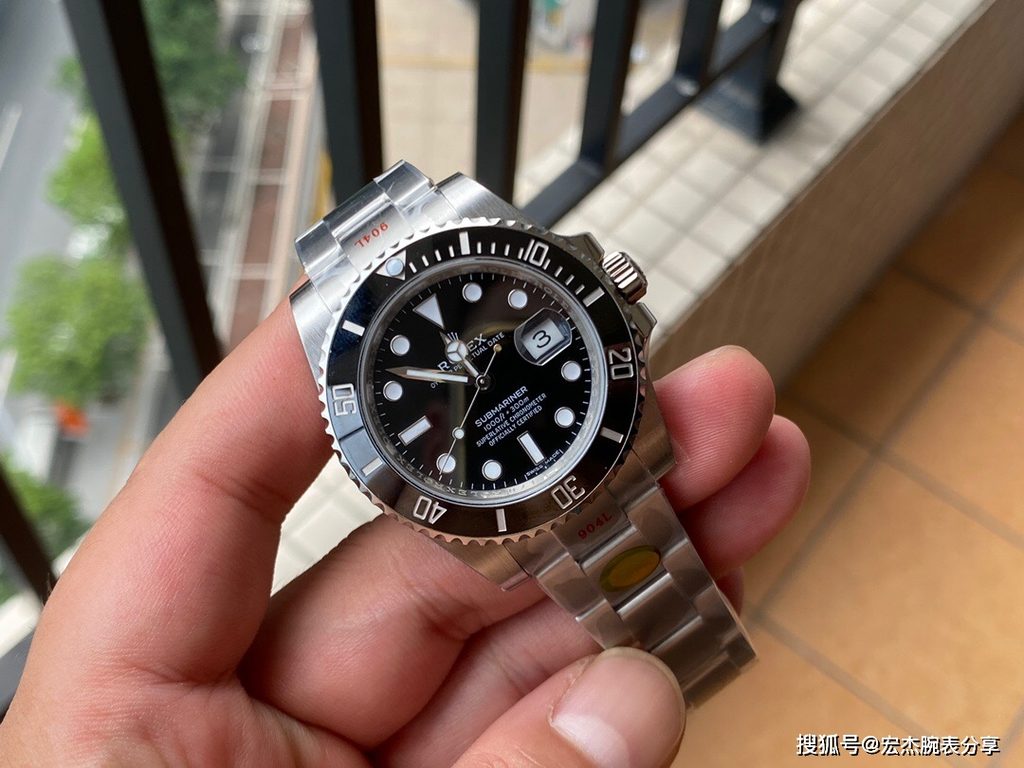
Rolex does not describe bracelet resizing as an authentication procedure. Its official guidance explains that authenticating a watch requires specialist knowledge, equipment, and the ability to evaluate its components.
The distinction is especially important when counterfeiters reproduce external details that are easy to inspect during routine handling. A convincing bracelet, crown, and case finish can create a favorable impression without demonstrating that the movement, internal construction, or manufacturing origin is genuine.
The WIRED reporters eventually consulted counterfeit-watch specialist Adrian Hailwood, who examined their purchases more closely. His assessment identified differences in finishing and movement design despite the watches’ convincing outward appearance.
The lesson is not that Rolex employees cannot recognize counterfeits. Nor is it that every high-end replica can pass an informal boutique encounter.
It is that passing a limited inspection says little about characteristics that were never examined.
The same distinction applies when enthusiasts describe a replica as nearly indistinguishable from the genuine model. That description may be reasonable when comparing photographs of the dial and case. It becomes much less informative when extended to movement durability, manufacturing consistency, or long-term serviceability.
A convincing appearance is evidence of successful visual imitation. It is not evidence of comprehensive product quality.
The Factory Rankings That Keep Changing
The replica-watch community has developed its own system for comparing manufacturers, often using reference-specific rankings and labels such as NWBIG, an abbreviation for “Not Worth Buying in Genuine.”
The phrase is a community judgment, not a recognized watchmaking certification. It usually expresses the view that a particular replica is sufficiently convincing or satisfying that some enthusiasts see limited reason to pay for the genuine model.
Those assessments can contain useful information, particularly when contributors compare identifiable versions of the same watch. They also change as new products appear.
In February 2026, the r/RepTime community’s “Who Makes the Best” guide removed references to Clean Factory following reports that its original operation had ceased production. The update also changed recommendations for several Rolex models, including the Explorer II and selected Daytona configurations.
By October, another revision had altered the picture again.
The guide’s editor continued to favor VSF for the Submariner, citing its overall execution and crystal quality, but elevated RWF to the leading position for the contemporary Daytona 126500. The editor specifically identified a bezel-detail issue as part of that judgment and acknowledged that the number of competing Daytona factories made the category difficult to follow.
These changes are revealing because they undermine the idea that the best Rolex replica factory can be identified once and treated as the permanent answer.
A manufacturer may excel at the Submariner while offering a less convincing Daytona. A newer production version may improve a movement but introduce a cosmetic problem. Another factory may produce a more accurate dial while offering a less satisfying bracelet or crystal.
Even within the same model family, the result can change.
The Daytona 116500LN and 126500LN are not interchangeable targets for imitation. Their genuine counterparts belong to different generations, with changes to the movement and exterior design. A ranking based on one cannot automatically be transferred to the other.
The same principle applies to GMT-Master II and Datejust replicas, where movement versions, dial configurations, and component revisions complicate comparisons.
Community guides are most useful when treated as dated records of informed opinion about specific products. They become misleading when their conclusions are repeated without the reference number, production version, or date.
The strongest factory name is not necessarily attached to the strongest individual watch.
The Missing Evidence in a Quality-Control Photograph
Replica enthusiasts often examine watches through dealer-supplied quality-control photographs before shipment. The images typically show the dial, bezel, case, bracelet, and selected details, sometimes accompanied by a video of the movement running on a timegrapher.
This process can reveal obvious problems.
An off-center dial marker, visibly uneven printing, a damaged component, or a date display that sits incorrectly in its window may be apparent in a clear photograph. Comparing images of the exact reference can also help identify differences between production versions.
But the method has important limitations.
A photograph cannot establish the durability of a movement’s internal components. A brief timegrapher reading cannot demonstrate how the watch will perform after months of wear. Nor can a visual inspection reliably establish water resistance or confirm that the watch will remain mechanically sound.
The limitations are not unique to replica watches. Professional watchmakers also distinguish between a movement’s observed performance at one moment and its condition over time.
Rolex’s own testing process illustrates how much information lies outside a conventional QC photograph. Its Superlative Chronometer certification evaluates the completed watch after the movement has been installed in its case. Rolex specifies a daily precision tolerance of -2/+2 seconds and separately tests water resistance, winding performance, and power reserve.
These tests are part of a documented manufacturing and quality-assurance system. A replica dealer’s photograph of a timing machine does not establish that an equivalent testing program has been performed.
The difference should not be exaggerated in the opposite direction. A good timegrapher result can still be useful evidence about the movement’s performance under the measured conditions.
It simply does not answer every question.
The WIRED purchase demonstrated another limitation that is even easier to overlook. A watch can receive favorable visual attention while the transaction fails to deliver the correct size.
A quality-control process that focuses on whether a 41mm watch looks well assembled cannot compensate for the fact that the customer ordered a 36mm watch.
Product identity, manufacturing quality, and order fulfillment are separate matters. Treating them as one score makes it easier for a technically impressive watch to conceal a disappointing purchase.
What Happens After the First Month?
Most replica comparisons concentrate on watches that are new or have been worn for a relatively short period. Their strongest evidence often concerns visible construction and initial operation.
Long-term reliability is harder to establish.
To make a meaningful claim about failure rates, researchers would need information about how many watches were produced, how many were followed over time, the conditions in which they were used, and the nature of any failures. Public enthusiast discussions generally do not provide that complete dataset.
A forum containing several reports of movement problems does not establish that a particular factory has a high failure rate. Owners with problems may be more motivated to post than owners whose watches operate normally, while positive reviews may be concentrated shortly after delivery.
The opposite problem also exists. A small number of favorable ownership reports cannot demonstrate that a movement is reliable across thousands of watches.
This does not make owner experience irrelevant. Detailed accounts of specific failures, repairs, and component replacements can identify recurring concerns worth investigating. Their value depends on the quality of the documentation and whether the watch’s movement and production version are clearly identified.
For the buyer, the larger question is what happens when a problem requires professional attention.
A movement designed to imitate a Rolex caliber may not have the same component tolerances, parts availability, or servicing arrangements as the genuine movement. A repairer may be willing to work on one clone caliber but unwilling or unable to obtain replacement components for another.
These possibilities do not prove that every replica is difficult to repair. They show why a favorable initial review cannot establish the lifetime cost or serviceability of the watch.
The genuine Rolex comparison also needs context. An authentic watch can require maintenance, suffer accidental damage, or develop mechanical problems. The distinction is not that genuine Rolex watches never fail.
It is that Rolex provides a documented service network, manufacturing standards, and warranty terms for qualifying genuine watches. Its five-year international guarantee is backed by the manufacturer and subject to defined conditions.
An unauthorized replica cannot inherit those assurances simply because it reproduces the appearance of the original.
A seller’s promise of a warranty is a separate contractual claim whose practical value depends on the seller’s ability and willingness to honor it.
The Best Fake Depends on Which Question You Ask
A replica can be evaluated from several perspectives, and those perspectives do not necessarily produce the same answer.
Someone comparing photographs may place the greatest importance on dial accuracy and case proportions. A person interested in mechanical construction may focus on movement architecture and complication functionality. An owner concerned with everyday use may care more about comfort, winding feel, legibility, and whether the watch continues operating reliably.
These preferences are understandable, but they should not be confused with independently established measures of overall quality.
Consider the Submariner and Daytona.
A Submariner-style replica may reproduce the familiar three-hand display and rotating bezel convincingly. A Daytona-style replica adds the challenge of a functioning chronograph, with additional mechanical complexity and more opportunities for differences between the imitation and genuine movement.
That does not mean a Daytona replica must always be less reliable or less accurate in appearance. It means the watches present different engineering problems, so a single factory-wide quality label cannot adequately describe both.
There is also a distinction between a replica that looks convincing at normal viewing distance and one that remains convincing under detailed inspection.
A dial may appear excellent on the wrist but reveal printing differences under magnification. A bracelet may feel substantial while using components that differ from the original construction. A movement may reproduce the genuine watch’s functions without reproducing every aspect of its architecture.
Each observation can be valid within its scope.
The problem arises when one favorable characteristic is used to justify a broader conclusion that the evidence does not support.
Calling a watch the best Rolex fake because its dial looks accurate is not the same as establishing that it is the most reliable, most consistently manufactured, or best supported after purchase.
A meaningful comparison should make clear which characteristic is being evaluated and which remain unknown.
The Cost of Mistaking Imitation for Quality
The WIRED investigation is unusual because it provides a documented purchase experience rather than relying entirely on seller photographs or community rankings.
The reporters paid real money, received physical watches, visited a Rolex boutique, and obtained a specialist’s assessment. That sequence gives the story more evidentiary value than a promotional comparison assembled from manufacturer-supplied images.
It also prevents the experience from being reduced to a simple success story for counterfeit manufacturers.
The replicas were visually impressive. They arrived. They operated. One passed through a routine interaction at a Rolex boutique without being identified as counterfeit.
Yet one was the wrong size, and the seller did not provide the remedy the customer wanted.
The investigation also raised the ethical and legal issues surrounding unauthorized Rolex-branded watches. A convincing counterfeit remains a counterfeit, regardless of its craftsmanship, and its sale may infringe trademark rights. Laws governing purchase, possession, importation, and resale vary by jurisdiction.
These considerations are not incidental to evaluating the product. They affect the channels through which it can be sold, the protections available to customers, and the possibility of obtaining reliable service or resolving disputes.
The fact that a replica costs far less than a genuine Rolex does not automatically make it good value. Price is meaningful only in relation to what the buyer receives and the risks assumed.
An inexpensive watch that performs reliably for years may satisfy its owner. A more expensive imitation that looks impressive in photographs but develops mechanical problems or arrives incorrectly may not.
Without reliable long-term data, neither outcome can be assumed to represent the entire category.
The available evidence supports a more limited conclusion: some modern counterfeit Rolex watches have achieved a high level of visual resemblance, but that achievement does not establish consistent manufacturing quality or a dependable purchasing experience.
The phrase best Rolex fakes often encourages readers to search for a single winning factory or model. The 2026 evidence points toward a more complicated answer.
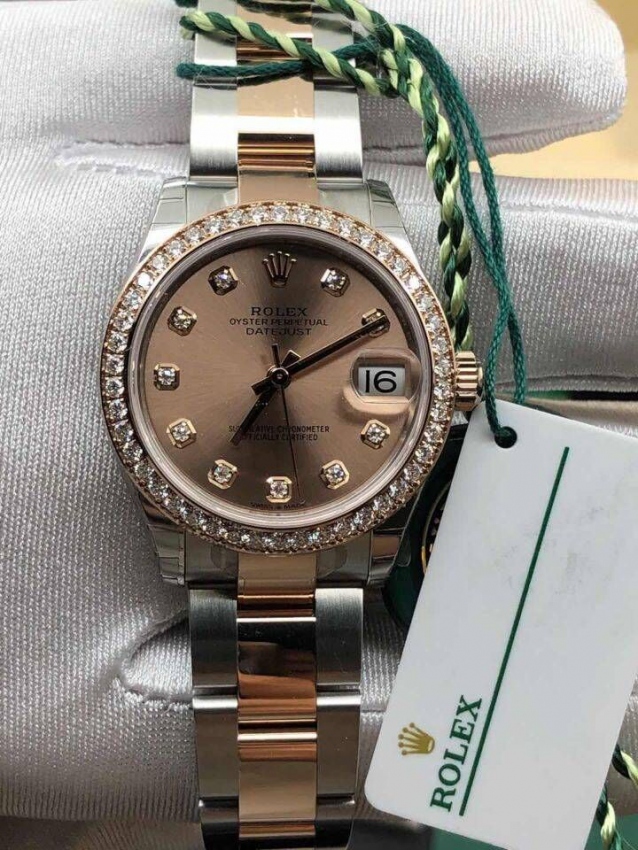
Community rankings are provisional. Quality-control photographs examine only part of the product. Long-term reliability remains difficult to quantify. A watch that survives casual scrutiny may still fail a basic delivery requirement.
Perhaps the most important distinction is between a watch that successfully imitates Rolex and a product that meets the expectations created by its own advertisement.
The first achievement can be demonstrated through appearance and limited technical comparison. The second requires evidence of consistent manufacturing, accurate fulfillment, dependable performance, and meaningful accountability when something goes wrong.
